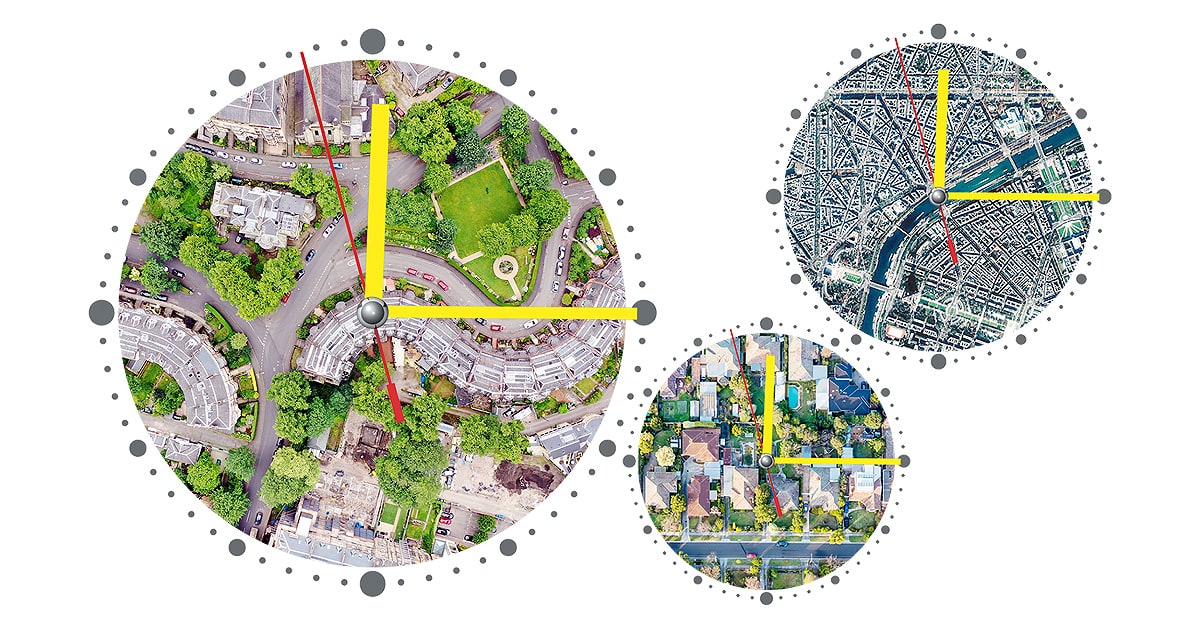

Background
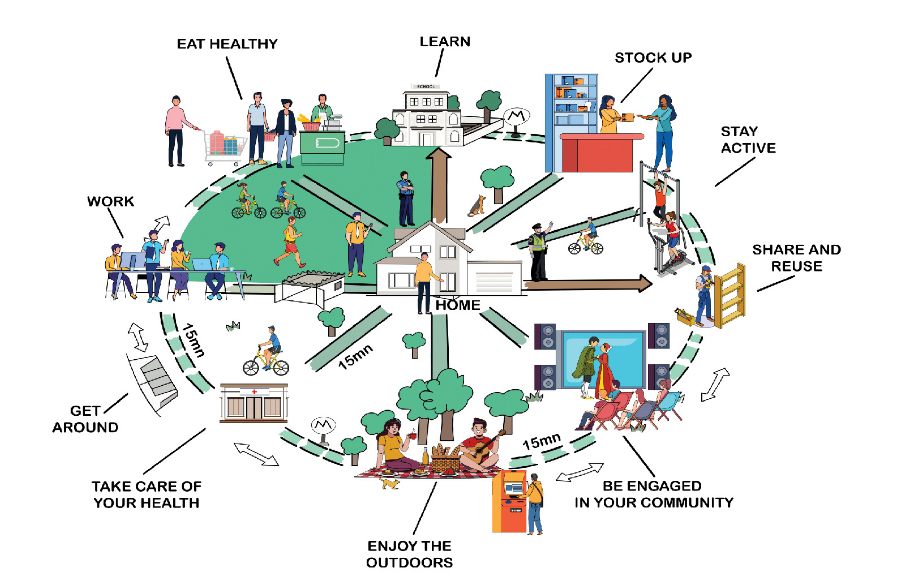
In recent years, this concept has gained popularity globally, particularly as cities confront growing challenges related to traffic congestion, environmental degradation, and social inequalities. For instance, Paris adopted the 15-minute city concept as part of its urban renewal strategy, transforming streets to prioritize pedestrians and cyclists, thus significantly improving urban walkability and quality of life (Plastara & Pozoukidou, 2023). Similarly, research in Utrecht, Netherlands, highlights how integrating cycling and pedestrian infrastructures within this framework significantly addresses spatial inequalities and accessibility issues, benefiting both socioeconomically advantaged and disadvantaged populations (Bruno et al., 2024).
For this project, we attempted to explore the relationship between accessibility to urban green spaces and the income levels of community residents within the framework of the X-minute city of Zurich, which provides a meaningful opportunity to develop equitable urban planning strategies. Existing literature highlights the importance of walkability and green space availability in promoting urban health, sustainability, and social equity; however, socio-economic disparities often lead to an unequal spatial distribution of these essential urban characteristics. Addressing these inequalities requires an integrated approach to spatial analysis, including Geographic Information Systems (GIS), network centrality measures and socio-demographic data integration (Zysk & Zalewska, 2024). By looking specifically at the urban context of Zurich, this study can provide valuable insights into how different accessibility thresholds affect green space provision and socio-economically driven disparities. Ultimately, the effective implementation of the X-minute accessibility concept depends on a careful balance between spatial planning interventions, socio-economic factors, and inclusive development policies to ensure that all community groups benefit from improved urban livability and environmental quality.
 https://www.burohappold.com/
https://www.burohappold.com/